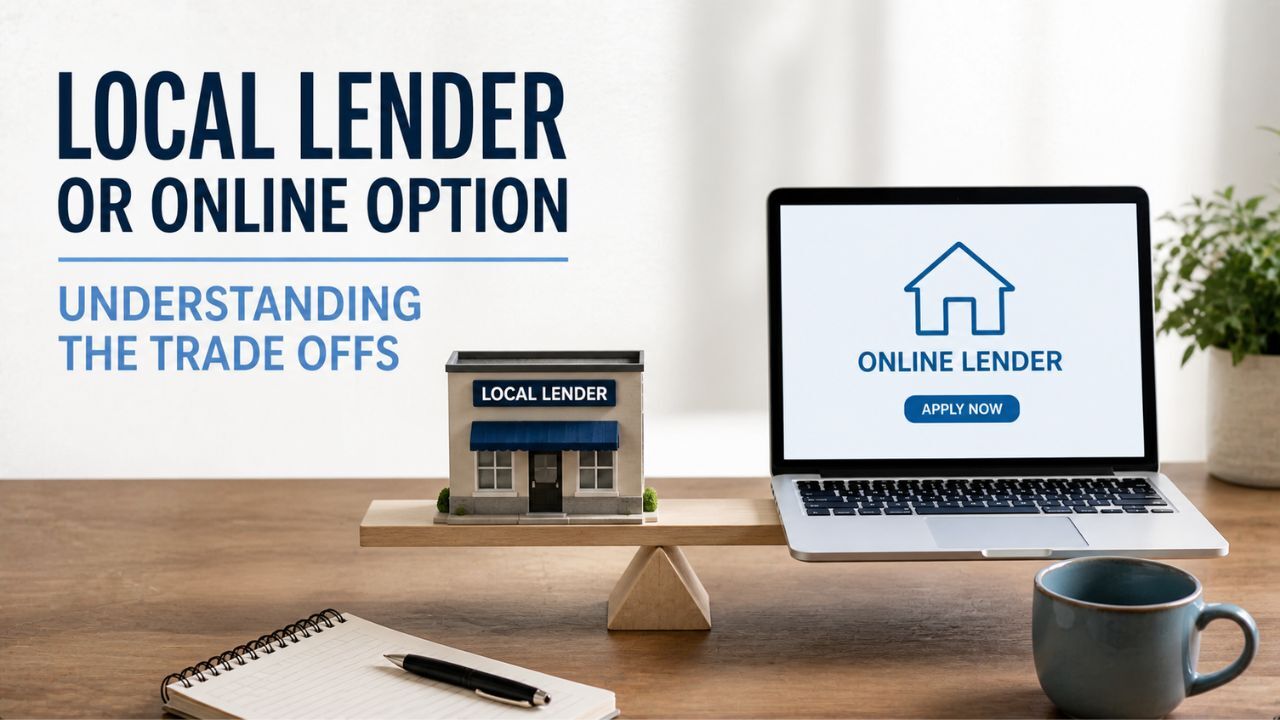
 Choosing the right lender is a critical part of the homebuying process, and many buyers find themselves deciding between a local lender and an online option. While both can provide financing, the experience, level of service, and overall support can vary significantly.
Understanding the tradeoffs allows you to choose the option that best fits your needs and helps ensure a smoother transaction from start to finish.
The Value of Working with a Local Lender
Local leaders often provide a more personalized and hands-on experience. You typically have direct access to a loan officer who understands your situation and can guide you through each step of the process.
Communication is often faster and more consistent, which can be especially important when timelines are tight. Local lenders also tend to have a stronger understanding of the market, which can be helpful when navigating appraisals and closing timelines.
The Convenience of Online Lenders
Online lenders are known for their speed and accessibility. Many offer streamlined applications that can be completed quickly, sometimes with faster initial approvals. For buyers who prefer a digital experience and minimal in person interaction, this can be appealing. However, communication may be less direct, and you may not always work with the same representative throughout the process.
Comparing Rates, Fees, and Flexibility
It is important to compare both options carefully when it comes to rates and fees. While online lenders may advertise competitive rates, the overall cost of the loan can vary depending on fees and terms. Local lenders may offer more flexibility and be better positioned to adjust to unique financial situations. Looking at the full picture rather than just the rate helps you make a more informed decision.
Communication Can Make or Break the Process
One of the biggest differences between the two options is communication. A responsive lender who keeps you informed can make the process feel smooth and manageable. Delays or lack of clarity, on the other hand, can create unnecessary stress. Consider how important accessibility and guidance are to you when making your choice.
Choosing the Right Fit for Your Situation
There is no one size that fits all answer when it comes to selecting a lender. Some buyers value convenience, while others prioritize personal support and guidance. Evaluating your priorities will help you determine which option aligns best with your expectations and comfort level.
Choosing the right lender can impact your entire homebuying experience, from application to closing. Ready for a mortgage? Give us a call today to explore your options.
 The inflation data scheduled for this week has been pushed back by one week. The unemployment data was the only impactful economic report released this week. Across the board, unemployment statistics came in within expectations, while wage increases were slightly below expectations. Historically, wages have lagged behind inflation, making both unemployment and wage growth strong barometers of the economy’s overall health. Despite the current state of affairs, the economy appears to be holding strong, as reflected across the broader markets.
 Whether you’re buying or selling, the appraisal is one of those moments that can quietly make—or break—a deal. It’s also one of the most misunderstood parts of the process.
 You found the home. Your offer was accepted. Everything should feel exciting… right?
 If you’re a homeowner, foreclosure is one of those things you hope you never have to think about. But if payments start getting tight, it can suddenly feel very real—and very overwhelming.
 Remodeling your home can be one of the best ways to increase its value—and make your space actually work for your life. But let’s be honest: it can also go sideways fast if you’re not careful.
 One of the most common misconceptions in home buying is that the amount you are approved for is the amount you should spend. In reality, lenders calculate the maximum you qualify for based on your income, debts, and credit profile.
 One of the most common mistakes buyers make after applying for a mortgage is changing their financial situation too quickly. This can include opening new credit cards, finance a car, or make large purchases. Even if you have already been pre-approved, lenders continue to monitor your financial profile until closing.
 A loan officer does much more than collect documents and submit applications. One of their most important roles is helping you understand your options in a way that makes sense for your situation. Mortgages are not one size that fits all, and the differences between loan types can impact your finances for years.