 Most homeowners move before making the final payment on a thirty-year mortgage. Selling a home with an outstanding loan is completely normal, but many homeowners are unsure what happens to the remaining balance. Understanding the process can help you plan for your sale, estimate your proceeds, and prepare financially for your next home.
Your Mortgage Is Paid Through the Sale
When your home is sold, the closing company requests a payoff statement from your mortgage servicer. This statement shows the amount required to satisfy the loan through the expected closing date, including the remaining principal, accrued interest, and any applicable fees. Part of the buyer’s funds is then used to pay the mortgage off at closing.
Your Equity Helps Determine Your Proceeds
After the mortgage and other transaction expenses are paid, the remaining funds generally become your proceeds from the sale. Your available equity depends on the home’s sale price, the unpaid loan balance, and selling costs. Reviewing an estimated settlement statement can help you understand how much money may be available for your next purchase or other goals.
The Loan Usually Does Not Move With You
A traditional mortgage is secured by a specific property, so it generally cannot simply be transferred to your next home. When you purchase another property, you will normally apply for a new mortgage based on your current income, credit, debts, assets, and the new home’s value. Certain specialized loans may have different rules, so confirm the details with your servicer.
Timing Both Transactions Takes Planning
If you are selling and buying around the same time, the timing of your closing dates can affect your down payment and moving plans. Some buyers sell first, while others use financing or contract strategies that help coordinate the transactions. Starting early gives your real estate and mortgage professionals more time to identify the best approach.
Check for Liens and Other Payoffs
A mortgage may not be the only amount that must be settled at closing. Home equity loans, lines of credit, property tax balances, or other liens connected to the property may also need to be paid. Reviewing title information and estimated closing figures early can help you understand the net proceeds more accurately and avoid last-minute surprises.
You do not have to remain in a home until the mortgage is fully repaid. In most sales, the outstanding loan is paid from the closing proceeds, and any remaining equity belongs to the seller after other costs are settled. Knowing your estimated payoff and equity can make the transition to your next home much easier to plan.
 Inflation affects far more than the price of groceries and gasoline. It can also influence mortgage rates, household budgets, home prices, and the amount of money buyers feel comfortable spending. Understanding how inflation connects to the home-buying process can help you make decisions based on your complete financial picture rather than focusing on only one number.
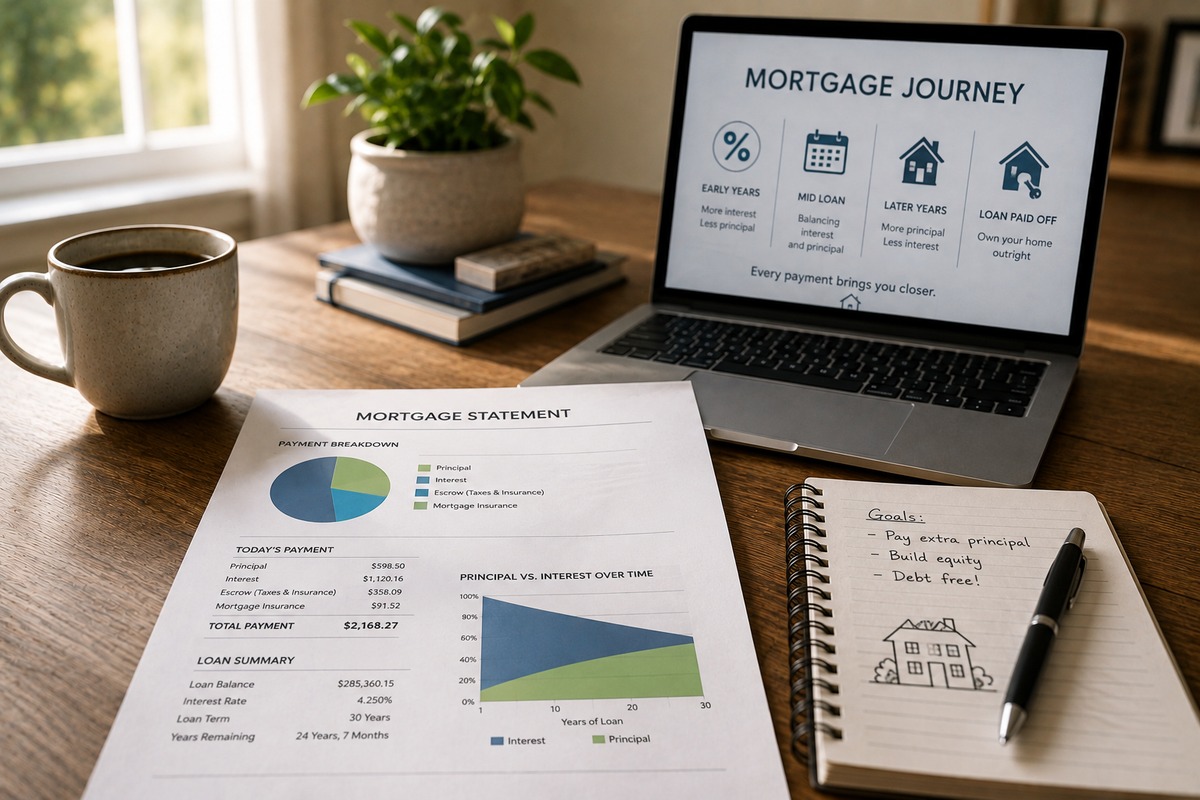 A mortgage payment may look consistent from month to month, but the way that payment works changes throughout the life of the loan. Understanding how principal, interest, escrow, and other costs evolve can help homeowners read statements more confidently and see the progress they are making over time.
 Moving can be the right choice when your lifestyle, employment, or family needs change. However, remaining in a home for a longer period can also offer meaningful financial advantages. Understanding those benefits can help homeowners evaluate whether staying put supports their goals better than purchasing another property.
 Closing day marks the end of the home-buying transaction, but it also begins the long-term process of managing your mortgage. After closing, a mortgage servicer becomes responsible for collecting payments, maintaining account records, managing escrow when applicable, and answering questions about your loan. Understanding the servicer’s role can help you avoid confusion and manage your mortgage with confidence.
 A mortgage is often the largest financial commitment a household carries, but it should not be viewed separately from the rest of your financial life. Your housing payment affects how much you can save, invest, spend, and prepare for future goals. Understanding how your mortgage fits into your overall plan can help you make decisions that support both homeownership and long-term financial stability.
 If you have recently purchased a home, you have probably heard the term “escrow” several times throughout the mortgage process. While many homeowners understand that escrow is part of their monthly payment, they are often unsure how it actually works. Understanding your escrow account can help you better manage your mortgage, avoid surprises, and feel more confident about your homeownership expenses.
 Buying a home is often one of the first major steps people take as they prepare for a growing family. Whether you are expecting your first child or planning for the future, it is important to think beyond today’s budget and consider how your financial needs may change over time. Preparing in advance can help you feel more confident as your family grows and your priorities evolve.