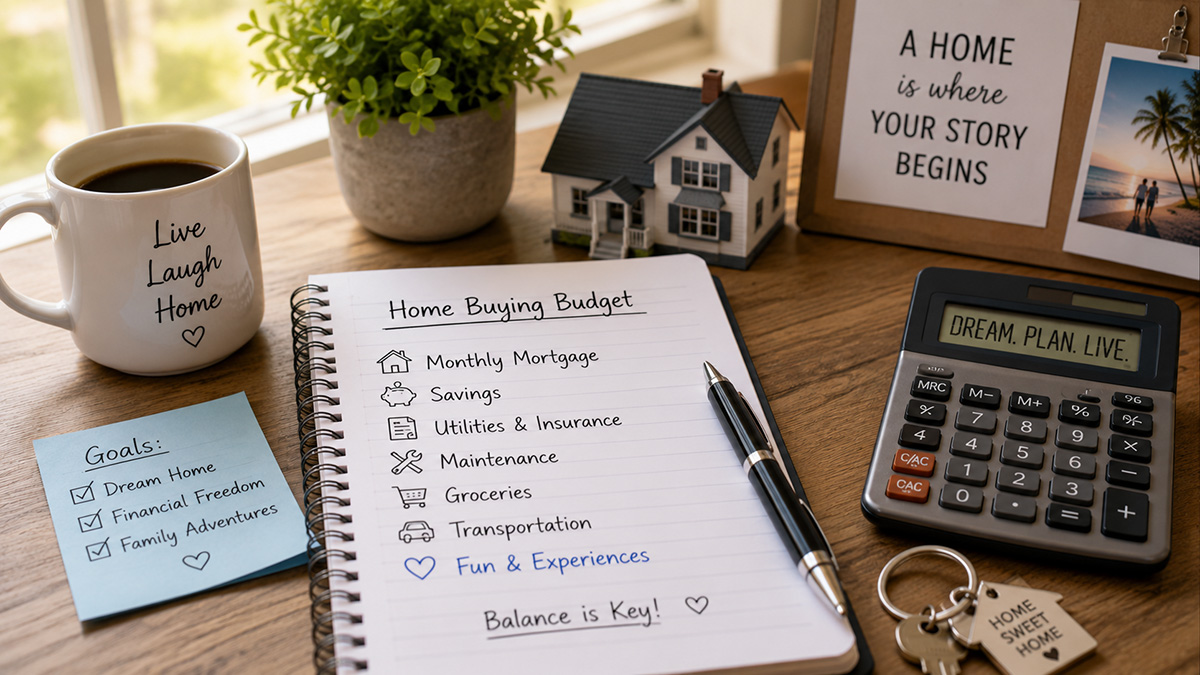
 Buying a home is an exciting milestone, but it should not mean giving up everything you enjoy. A well-planned budget helps you become a homeowner while still making room for vacations, hobbies, family outings, and the occasional dinner out. The goal is to create a financial plan that supports your lifestyle instead of limiting it.
Start With Your Monthly Income
Before shopping for a home, take an honest look at your monthly income and expenses. List everything from utilities and groceries to streaming services and gym memberships. Knowing where your money goes each month gives you a clearer picture of what you can comfortably afford without stretching your finances too thin.
Leave Room for Everyday Living
Many buyers focus only on what they can qualify for, but qualifying for a certain loan amount does not always mean it is the best choice. Think about the activities that are important to you, whether it is traveling, dining out, saving for retirement, or supporting your children’s activities. Your housing payment should allow you to continue enjoying the life you have worked hard to build.
Plan for Unexpected Expenses
Homeownership comes with expenses that renters may not experience. Appliances eventually need replacing, small repairs arise, and seasonal maintenance becomes part of owning a home. Setting aside money each month for these costs can help you avoid financial stress when unexpected repairs appear.
Build Savings Into Your Budget
A healthy budget includes more than monthly bills. Continue contributing to your emergency fund and long-term savings after purchasing your home. Maintaining financial flexibility provides peace of mind and helps you prepare for life’s unexpected changes without relying on credit cards or loans.
Work With a Mortgage Professional
A mortgage professional can help you understand different loan options and estimate monthly housing costs beyond just the mortgage payment. Property taxes, homeowners insurance, and other expenses all play a role in determining what fits comfortably within your budget. Together, you can find a payment that supports both your homeownership goals and your overall financial well-being.
Owning a home should be a source of pride and stability, not financial worry. By creating a realistic budget that balances your housing costs with the lifestyle you enjoy, you can feel confident that your new home supports both your present and your future.
 Buying a home before your lease expires may seem like paying for two places at once, but in many cases it can actually make the transition smoother and less stressful. Every situation is different, and understanding your options can help you decide whether overlapping your lease and mortgage is the right move.
 As closing day approaches, many homebuyers assume the mortgage process is nearly complete. While that is often true, lenders may continue reviewing your financial information until the final approval is issued. Even small changes to your finances can create new questions, require additional documentation, and potentially delay your closing. Knowing what to avoid can help keep your home purchase on track.
 Buying a home is an exciting milestone, but qualifying for a mortgage may feel challenging for some buyers. If your income, credit profile, or purchasing power falls short of your homeownership goals, applying with a co-borrower may help strengthen your mortgage application. While adding another borrower is not the right solution for everyone, understanding how it works can help you make an informed decision.
 The final month before closing is one of the most exciting parts of the home buying journey. It is also one of the most important times to keep your finances as stable as possible. Many buyers believe that once they receive loan approval, they can return to their normal spending habits. In reality, lenders often continue reviewing financial information until just before closing. Taking a few simple steps during these final weeks can help keep your mortgage on track and prevent unnecessary delays.
 Applying for a mortgage does not end once your initial paperwork has been submitted. Many homebuyers are surprised when their lender requests updated financial documents later in the process.
 Many homebuyers assume mortgage approval depends entirely on income and credit score. While those factors are important, lenders also look at overall financial behavior when evaluating a loan application. The good news is that building strong financial habits before applying for a mortgage can improve your chances of a smoother approval process and reduce potential obstacles along the way.
 For many first-time homebuyers, receiving the first mortgage statement can be a confusing experience. One of the most common questions borrowers ask is why their monthly payment is higher than the principal and interest amount quoted during the loan process. The answer often involves an escrow account and the additional expenses it helps manage.