
CTeBockhorst's Blog

The Mortgage and Real Estate Scoop

  • Home
  • About
  • Blog
  • Resources
    • Calculators
    • Download My eGuide Today!
    • First Time Buyer Tips
    • First Time Seller Tips
    • Loan Checklist
    • Loan Process
    • Loan Programs
    • Home Appraisal
    • Home Inspection
    • What to Expect at a Loan Closing: A Step-by-Step Guide
  • Apply
  • Reviews
    • Read My Reviews
    • Zillow Reviews
    • Leave a Review
  • Contact

What’s Ahead For Mortgage Rates This Week – July 13, 2020

July 13, 2020 by Coleen TeBockhorst

What's Ahead For Mortgage Rates This Week - July 13, 2020Last week’s scheduled economic news included readings on consumer credit, job openings, jobless claims, and mortgage rates.

Consumer Borrowing Declined at Slower Pace in May

According to Federal Reserve data, consumer borrowing fell at a slower annual pace of -5.30 percent in May as compared to April’s reading of -20 percent. Non-revolving consumer credit, which includes vehicle and student loans, increased by 2.30 percent in May. The Federal Reserve does not report on real estate loans.

Federal assistance programs including the first round of stimulus checks, additional unemployment payments and support for businesses contributed to better readings for the economy in May, but last week’s rising coronavirus cases may cause all or part of economic gains to be lost as local governments reverse decisions to reopen businesses and local government services.

Job Openings Rise  in May as Weekly Jobless Claims Fall

The Bureau of Labor Statistics reported 5.40 million job openings in May as compared to April’s 5.00 million job openings. Rising job openings coincided with reopening business and government services as state and local authorities eased stay-at-home requirements and began easing restrictions on economic activity.

Weekly jobless claims were also lower than for the preceding week. 1.31 million initial jobless claims were filed last week as compared to the prior week’s reading of 1.41 million first-time claims filed. Ongoing jobless claims fell to 18.10 million claims from the prior week’s reading of 18.80 million continuing jobless claims. Jobless claims remained much higher than pre-pandemic readings.

Mortgage Rates Drop to Record Lows

Freddie Mac reported the lowest recorded average mortgage rates as rates for fixed-rate mortgages dropped by four basis points to 3.03 percent for 30-year fixed-rate mortgages and fell by five basis points to 2.51 percent for 15-year fixed-rate mortgages. The average rate for 5/1 adjustable rate mortgages rose two basis points to 3.02 percent; discount points averaged 0.80 percent for fixed-rate mortgages and 0.30 percent for 5/1 adjustable rate mortgages.

The U.S. Senate is expected to work on its version of the next Coronavirus relief package next week; it should be completed by the end of July or in early August.

What’s Ahead

This week’s scheduled economic news includes reports on housing markets, housing starts, and consumer sentiment. Weekly readings on mortgage rates and jobless claims will also be released.

 

Filed Under: Financial Reports Tagged With: Economic News, Financial Report, Jobless Claims

4 First Things You Should Do After You Move In

July 10, 2020 by Coleen TeBockhorst

4 First Things You Should Do After You Move InCongratulations on moving into your new house! But hold on. Now that the house is yours, there are a few things you will want to do in order to make life in your new home more comfortable and secure. Before you plan your housewarming party, here is a list of the first things you should do after you move in.
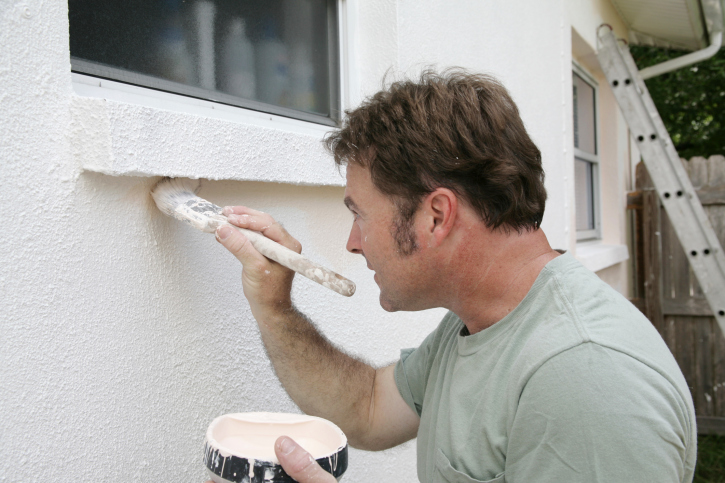
1. Change The Locks

As the new homeowner, you have no way of knowing how many others have keys to your new home. The previous owner may have made copies for their housekeeper, their parents, the babysitter, a neighbor, or anyone else. You definitely don’t want anyone else having keys to your home. Have a locksmith come in and change all the locks. The investment will help you sleep soundly.

2. Find Out Your Boundaries

Check in with town hall to see if there are documents on file that lay out the boundaries for the land you just purchased. If not, consider having a land surveyor come out to mark the boundaries around your new home. This will ensure that you don’t accidentally do things that encroach on your new neighbor’s land, such as planting trees or flowers, erecting a fence, or setting up a swing set.

3. Introduce Yourself To The Neighbors

Pencil in a day to go around and meet your new neighbors. Don not wait too long to do this; the longer you wait, the more awkward it becomes. In theory, they should be introducing themselves to you, but these days you could be waiting a long time for an apple pie to show up at your door. Just wait for the weekend and give a light knock on the doors on your street. Your neighbors will appreciate the gesture and you might just meet a new friend.

4. Make A House Map

A house map is just a general layout of where all the important fixtures are. The map should include the furnace, all outdoor spigots, the main water shut-off valve, the septic tank lid cover (if applicable) and the circuit box. Finally, invest in some fire extinguishers and mark their locations on the map, too. Have it laminated and put it someplace where all the family members can access it.

Once you take care of these four things, you willll feel better knowing that you’ve done all the necessary chores. Now, just sit back and enjoy your accomplishment!


Filed Under: Mortgage Tips Tagged With: Mortgage Tips, Moving In, New Home

The Renovations That Provide The Best Return On Your Investment

July 9, 2020 by Coleen TeBockhorst

The Renovations That Provide The Best Return On Your InvestmentRenovating a home is not only a way to increase the family’s standard of living but it can also be seen as an investment. There are multiple ways for someone to increase the value of their home and renovations are one of the most straightforward. At the same time, some investments offer a better return than others.

Those who are thinking about selling their home in the future should strive to get every dollar possible. Renovations can make this happen.

Garage Door Replacement

When people think about renovations, they don’t often think about the garage. Some people don’t even include their garage in their square footage because it might not be heated; however, replacing the garage door can provide a major investment return.

In some cases, the value of the garage door itself may double with a simple replacement. While some people dread the prospect of replacing a damaged garage door, even upgrading a working one can lead to a significant return!

Manufactured Stone Veneer

Stone is a popular building material because it provides a sleek look in addition to being versatile. Therefore, it should come as no surprise that a stone veneer will also provide a major investment return. For those who spend around ten thousand dollars on a stone veneer, the value of this investment may nearly double. This provides a great way to not only upgrade the home but also increase its resale value.

Entry Door Replacement

A home’s doors are incredibly important because not only do they a measure of security but also they also draw someone’s eyes. Replacing an entry door may provide an investment return of close to 90 percent. Because this job can be handled quickly by a trained professional, this can be a quick upgrade for those looking to boost the value of their home before selling it.

Plan for Warm Weather Renovations

With the weather starting to heat up, many individuals and families are looking to plan their renovation projects for the summer. Think about the projects wisely as they can have a significant impact on the value of a home. Renovations should be viewed as investments as well as upgrades for the family’s standard of living. 

Filed Under: Mortgage Tips Tagged With: Home Improvement, Real Estate, Renovation

Five Tips for Managing Your Monthly Budget to Ensure Your Mortgage is Paid On-Time, Every Time

July 8, 2020 by Coleen TeBockhorst

Five Tips for Managing Your Monthly Budget to Ensure Your Mortgage is Paid On-Time, Every TimeHomeowners who are struggling to make their monthly mortgage payments can make it easier on themselves by cutting costs in other areas. Learning how to budget effectively will likely enable homeowners to pay their mortgage payments on-time, every time. Here are five of the best budget tips:

Conserve Energy

It is advisable to be mindful of energy use in order to keep utility bills down to a minimum. Lights, televisions and other devices requiring electrical power are best to leave off in unoccupied rooms. It is also a good idea to make sure that windows and doors are properly sealed so that energy is not wasted.

Stay Committed to Couponing

All too often, coupons that arrive in newspapers or through emails are quickly discarded. Collecting coupons from various sources can give homeowners the chance to save big on groceries, entertainment and other everyday purchases. Some of the savviest consumers have been known to spend practically nothing on their purchases by simply staying committed to the art of couponing.

Watch Credit Card Usage

Having a credit card often creates a false sense of financial security. Many card holders are tempted to charge their credit cards up to their limits only to be burdened with high interest rates and inflated minimum payments. Credit cards are best to use only in times of emergencies.

Consider Alternative Transportation Methods

Fuel costs, auto repairs and other expenses associated with driving a vehicle on a frequent basis can make it much harder for homeowners to stay on top of their mortgage payments. People who have access to adequate public transportation may be able to significantly reduce their commute costs. Car sharing services give people the opportunity to use a car on an as-needed basis and often prove to be a smarter alternative to owning a vehicle.

Keep Expense Records

It can also be easier to set money aside for mortgage payments if expenses are carefully monitored with a detailed eye. It is best to closely scrutinize receipts, bank statements and other financial documents for any discrepancies. Keeping track of expenses on a spreadsheet so that all financial information is clearly displayed may be another practical idea.

Smart budgeting practices can help homeowners save the extra money they need to pay their monthly mortgage payments before each due date passes. Contact a local mortgage professional to learn more clever ways to manage money while trying to pay on a mortgage.

Filed Under: Home Mortgage Tips Tagged With: Mortgage Financing, Mortgage Tips, Paying Your Mortgage

How to Purchase A Luxury Home Without Up-sizing Your Costs

July 7, 2020 by Coleen TeBockhorst

How to Purchase A Luxury Home Without Up-sizing Your CostsSize matters when you are buying a new home. Whether you plan to expand your family, need more room for your stuff, or are concerned with resale value, you want to get the most space for your money.

Also, if you want to add a feel of luxury to your home, one of the best ways to do it is to create open spaces rather than cramming all your furniture in rooms so tiny you can barely walk around without knocking something over.

Traditionally speaking, the larger a home is, the more it costs. If there are two newly built houses side by side in a subdivision, the bigger one is likely to cost more. However, there are some tricks to finding spacious houses that are affordable.

Choose Emerging Neighborhoods

Houses in this year’s trending neighborhood are at their peak prices. Clever buyers look for neighborhoods that are in the process of being gentrified, buying at the bottom rather than the top of the market, to get more house for their money.

Fix It Up

Houses in perfect condition, that show well, sell for a premium. If you want to get more house for your money, choose something that needs a bit of TLC. A house that has pink walls and orange shag carpet might appear just too ugly to consider when you first view it, but it might just need a few coats of paint and some new carpet to become a spacious dream home.

Do Some Finishing

Unfinished areas such as attics and basements can be finished to create additional living spaces. The basement could become a family room and the attic an extra bedroom or study. An unfinished space can become the extra bathroom you need to make morning more manageable.

Consider an Addition

Contractors can add rooms to a house. If you have a large lot, you can build an extra wing. With a one story ranch house, it may be possible to raise the roof and add a second story.

The more stuff you have, the smaller your home appears. Reduce clutter and invest in smaller condo size furniture to give even the smallest home the appearance of spaciousness.

Filed Under: Home Buyer Tips Tagged With: Buying a Home, Home Buyer Tips, Real Estate Investing

What’s Ahead For Mortgage Rates This Week – July 6, 2020

July 6, 2020 by Coleen TeBockhorst

What's Ahead For Mortgage Rates This Week - July 6, 2020Last week’s scheduled economic reports included readings on pending home sales, Case-Shiller Home Price Indices, and labor sector reports on private and public-sector job growth. Data on construction spending was also released. Weekly readings on mortgage rates and jobless claims were also released.


Pending Home Sales Jump in May

Sales of homes for which purchase contracts were signed rose by 44.30 percent in May and was the highest month-to-month increase recorded since the report’s inception in 2001..Pending home sales are sales with signed purchase contracts but aren’t closed.

Lawrence Yun, chief economist for the National Association of Realtors® said,  “This has been a spectacular bounce-back and also speaks to how the housing sector could lead the way for a broader economic recovery.” This positive news could be dampened by rising infection rates for the Covid-19 outbreak as some states reversed decisions to re-open additional parts of their economies.

Case-Shiller: Home Price Growth Rises in April

The Case-Shiller National Home Price Index reported that home prices grew by 0.10 percent to 4.70 percent on a seasonally-adjusted annual basis. This reading lagged behind the worst part of the Covid-19 outbreak and analysts cautioned that home price growth would fall in the future. The Case-Shiller 20-City Index reported the top three cities for home price growth were Phoenix, Arizona, Seattle, Washington, and Minneapolis Minnesota. The geographical disparity between these cities differs from recent years when coastal cities dominated home price growth rates.

In related news, the Commerce Department reported improvement in construction spending in May. Construction spending fell -2.20 percent in May as compared to -3.50 percent in April.

 Mortgage Rates Hit All-Time Low; Jobless Claims Ease

Freddie Mac reported the lowest mortgage rates reported since the inception of their Primary Mortgage Market Survey. Rates for 30-year fixed-rate mortgages averaged 3.07 percent and were eight basis points lower. Rates for 15-year mortgages dropped by three basis points on average to 2.56 percent. Rates for 5/1 adjustable-rate mortgages dropped by eight basis points on average to 3.00 percent.

Discount points averaged 0.80 percent for fixed-rate mortgages and 0.30 percent for 5/1 adjustable rate mortgages. 

New jobless claims fell to 1.43 million claims filed from the prior week’s reading of 1.48 million initial claims filed. Ongoing jobless claims rose from 19.20 million claims to 19.30 million continuing jobless claims.filed. New and continuing jobless claims were far above pre-coronavirus levels.

Job Growth Reports Mixed as Unemployment Rate Falls

ADP reported 2.37  million private-sector jobs added in June as compared to May’s reading of 3.07 million private sector jobs added. The federal government’s Non-Farm Payrolls report showed 4.80 million public and private sector jobs added in June as compared to 2.70 million public and private sector jobs added in May.

What’s Ahead

This week’s scheduled economic reports include readings on job openings and weekly reports on mortgage rates and jobless claims.

Filed Under: Financial Reports Tagged With: COVID19, Financial Report, Unemployment

Pros And Cons Of Completing Home Renovations Before Selling

July 3, 2020 by Coleen TeBockhorst

Pros And Cons Of Completing Home Renovations Before Selling

Whether you originally bought a fixer-upper or you’re just a homeowner who wanted to update their house, chances are you have seen your share of home renovations. Home renovations have the potential to greatly add to the value of your property, but they can also add to your own quality of life. Hopefully, you have completed your home renovations and gotten plenty of use out of them before listing your home for sale. 
If not, you may find yourself wanted to move before all the renovations are complete. What’s the best course of action? Should you put the time and money in to finish? Or should you cut your losses and list the home for sale? What are the pros and cons of completing home renovations before selling?
Pro: The Home May Sell Easier
Your real estate agent will be happier if your home is fully renovated. That’s because they know that the home may sell easier in a fully renovated condition. Of course, you could get a prospective DIY homebuyer eager to put their own “stamp” on the home, but that is nothing you can count on.
Con: You May Not Recoup The Extra Expenses
Not all home renovations equate to value-added improvements that you can count in your wallet. If your renovations are small things like replacing door hinges, patching a hole in the plaster, or stripping outdated wallpaper, you are unlikely to see an equal increase in what you can get for your home sale.
Pro: There Will Be Less Explaining
If you have finished the renovation, you have nothing to explain and no excuses to make to anyone. In the renovated condition, the home is what it is. Even if a prospective home buyer does not happen to like the new paint color you have chosen, they still can?t complain that it is old or worn looking. 
Con: You Will Need To Delay Your Listing
Home renovations can take up a lot of time, as you may know, if you have done a lot of them already. You will have to delay listing your home, which in turn will mean putting your moving plans on hold for what could be an extra month or two. Depending on your future plans, this could impact your child’s school entry date and more.
No one will force you to complete half-finished renovations. But consider these pros and cons before deciding how to proceed.

Whether you originally bought a fixer-upper or you’re just a homeowner who wanted to update their house, chances are you have seen your share of home renovations. Home renovations have the potential to greatly add to the value of your property, but they can also add to your own quality of life.

Hopefully, you have completed your home renovations and gotten plenty of use out of them before listing your home for sale. 

If not, you may find yourself wanted to move before all the renovations are complete. What’s the best course of action?

Should you put the time and money in to finish? Or should you cut your losses and list the home for sale?

What are the pros and cons of completing home renovations before selling?

Pro: The Home May Sell Easier
Your real estate agent will be happier if your home is fully renovated. That’s because they know that the home may sell easier in a fully renovated condition. Of course, you could get a prospective DIY homebuyer eager to put their own “stamp” on the home, but that is nothing you can count on.

Con: You May Not Recoup The Extra Expenses
Not all home renovations equate to value-added improvements that you can count in your wallet. If your renovations are small things like replacing door hinges, patching a hole in the plaster, or stripping outdated wallpaper, you are unlikely to see an equal increase in what you can get for your home sale.

Pro: There Will Be Less Explaining
If you have finished the renovation, you have nothing to explain and no excuses to make to anyone. In the renovated condition, the home is what it is. Even if a prospective home buyer does not happen to like the new paint color you have chosen, they still can?t complain that it is old or worn looking. 

Con: You Will Need To Delay Your Listing
Home renovations can take up a lot of time, as you may know, if you have done a lot of them already. You will have to delay listing your home, which in turn will mean putting your moving plans on hold for what could be an extra month or two. Depending on your future plans, this could impact your child’s school entry date and more.

No one will force you to complete half-finished renovations. But consider these pros and cons before deciding how to proceed.


Filed Under: Mortagage Tips Tagged With: Mortgage, Renovation, Selling Home

It Is Tax Time Again Learn About Tax Deductions and How to Write off Your Home Mortgage Interest

July 2, 2020 by Coleen TeBockhorst

It Is Tax Time Again Learn About Tax Deductions and How to Write off Your Home Mortgage InterestMuch to the frustration of taxpayers all over the country, the tax-filing season begins in January and runs through April 15 of each year. The year 2020 brought us many changes, including an extension on filing taxes. Taxes this year are due on July 15th. Are you ready?

As the current tax season approaches, it presents an opportunity to help tax-payers clarify their responsibilities and remind them of certain important tax deductions that may be available.

Filing Responsibilities

Every person in the United States is required to file their tax returns by July 15 so long as they have some form of qualifying income. Based on filing status, income and available deductions, tax-payers must file a 1040EZ, 1040A or 1040 (long-form for itemized deductions).

Qualifying income is generally defined as, but not limited to wages, commissions, miscellaneous income (rental, interest), investment income and alimony. These forms of income are reported on a periodic basis to the IRS and State governments by employers, banks, contract employers and/or other responsible parties.

The most common tax receipts that must be sent to tax-payers by January 31 are W-2s and 1099-Misc forms.

Calculating Taxes

While the IRS requires individuals to report all forms of income, they also allow certain living costs to be used as deductions to offset income in order to arrive at a “taxable income” number on which tax liabilities are calculated.

If a tax-payer’s deductions fail to exceed the combined statutory standard deduction,, they will want to file the 1040EZ or 1040A. If itemized deductions exceed this number, the 1040 becomes preferable.

Mortgage Interest Deduction

For a majority of tax-payers, the largest tax deduction available is usually mortgage interest paid on secured debt where the primary residence and in some cases second homes or rental property serve as collateral. In most of these cases, all interest paid during the year is deductible.

If the mortgages are large enough, the total interest paid will typically push the tax-payer into position to itemize deductions. It is important for tax-payers to read the rules related to mortgage interest deductions as they tend to be somewhat complicated.

Other Important Deductions to Consider

Once a tax-payer qualifies to itemize deductions, many other living expenses become deductible. Other prominent deductions include property taxes, charitable contributions, childcare costs, qualified moving expenses, certain work related expenses and certain medical expenses.

Prior to using any deduction, it is incumbent on the tax-payer to review deduction guidelines in order to determine applicability.

Filed Under: Home Mortgage Tips Tagged With: Home Mortgage Tips, Mortgages, Property Taxes

Case-Shiller: Home Price Growth Holds Steady In April

July 1, 2020 by Coleen TeBockhorst

Case-Shiller: Home Price Growth Holds Steady In AprilCase-Shiller’s National Home Price Index showed little change in April as home prices rose by 0.10 percent to a year-over-year average of 4.70 percent. The 20-City Home Price Index showed corresponding home price growth of 0.10 percent to 4.00 percent year-over-year.

Ongoing influences on home price growth before the coronavirus pandemic included short supplies of available homes coupled with high demand for homes and low mortgage rates. While closures and shelter-at-home restrictions in many markets slowed buyer and seller activity,  real estate analysts said that home-buyer desiring to buy larger homes to accommodate working at home helped maintain home prices. Homeowners relocating to less congested areas also helped with stabilizing home-price growth in April. 

Case-Shiller 20-City Index: Home-Price Growth Rates Increases in 12 Cities

The three top cities in April’s 20-City Home Price Index were Phoneix, Arizona with a year-over-year home price growth rate of 8.80 percent; Seattle, Washington reported 7.30 percent yearly growth in home prices. Minneapolis, Minnesota reported home-price growth of 6.40 percent.

Home price growth rates increased in 12 of 19 cities reported. Detroit Michigan did not report to the 20-City Index for the second consecutive month. The coronavirus pandemic continued to grow and spread throughout the U.S during May; some states that opened their economies quickly are now reconsidering as Covid-19 cases rise at faster rates. Changing data and emerging responses to the spreading virus are expected to impact home price growth in the coming months according to whether the coronavirus spreads or diminishes.

FHFA Home Price Index: Home Prices Increase Despite Coronavirus Pandemic

The Federal Housing Finance Agency, which oversees Fannie Mae and Freddie Mac, reported 5.50 percent home price growth year-over-year in April compared to the March reading of 5.90 percent year-over-year growth. FHFA expects home prices to continue rising as real estate markets return to normal. With spring and early summer home sales impacted by coronavirus-related restrictions, Lynn Fisher, deputy director of research and statistics for FHFA, expected sales to pick up during the summer months.

As coronavirus infection rates increase, further restrictions and closings are anticipated and could negatively impact real estate markets and home prices soon.

Filed Under: Financial Reports Tagged With: Case Shiller, Corona virus, Home Pricing

A Breakdown – The Difference Between FHA, VA and USDA Mortgages

June 30, 2020 by Coleen TeBockhorst

A Breakdown - The Difference Between FHA, VA and USDA MortgagesAre you thinking about using mortgage financing to buy a new home? If so, you’ve likely heard about mortgage insurance policies requirements and you may be wondering how they will affect you. In today’s blog post we’ll explore mortgage insurance and explain the difference between conventional, FHA, VA and USDA mortgage insurance policies.

How Does Private Mortgage Insurance or “PMI” Work?

While there are a number of reasons that your lender may require mortgage insurance, in general you’ll be required to purchase a conventional PMI policy if you are putting less than 20 percent of the home’s value in as a down payment.

Another way your lender might explain this is that you have a “loan to value” or “LTV” ratio of higher than 80 percent, which means that the amount of your loan divided by the value of your home is higher than 0.8.

The cost of your private mortgage insurance policy will vary depending on a number of factors, such as your financial situation, FICO credit score, the cost of your home and more. Generally speaking you’ll be required to pay from one-half to one percent of the cost of your monthly mortgage payment in insurance fees.

Once your LTV ratio moves below 80 percent you may no longer be required to pay for PMI.

How Does VA Mortgage Insurance Work?

If you qualify for a mortgage from Veterans’ Affairs you’ll be pleased to know that you won’t be required to pay for mortgage insurance. In some instances you actually won’t be required to pay a down payment either, meaning that you may be able to borrow up to $400,000 to purchase a home without having to invest a cent of your own capital.

How Does USDA Mortgage Insurance Work?

Did you know that the Department of Agriculture runs a mortgage program? The USDA Rural Development mortgage offering is government-backed and like the VA mortgage program above you can finance 100 percent of the cost of your home without investing a down payment. However, unlike the VA program you’ll be required to pay for mortgage insurance. Currently the annual mortgage insurance premium on USDA loans is 0.5 percent.

How Does FHA Mortgage Insurance Work?

Finally, don’t forget about the Federal Housing Administration’s mortgage program. If you qualify for a FHA-backed mortgage, you’ll be paying about 1.35 percent in mortgage insurance premiums if you make the minimum down payment.

As you can see, there is a bit of a learning curve involved with fully understanding how all of the different types of mortgage insurance work. To learn more about mortgages and how insurance can benefit you, contact your local mortgage professional today.

Filed Under: Home Mortgage Tips Tagged With: Home Mortgage Tips, Mortgage Insurance, Mortgages

« Previous Page
Next Page »

Contact Coleen

Coleen Tebockhorst

Coleen TeBockhorst
coleen.tebockhorst@citywidehm.com

Senior Loan Officer

Call me! (612) 701-8512

NMLS #274205

Download My Mortgage eGuide today

CW Home Mortgage logo_White

Guaranteed Rate, Inc. DBA Citywide Home Mortgage

Categories

Our Location

10591 165th St. West
Lakeville MN, 55044

Connect With Me

This site is not authorized by the New York State Department of Financial Services. No mortgage loan applications for properties located in New York will be accepted through this site. Operating in the state of California as Guaranteed Rate, Inc. D/B/A Citywide Home Mortgage. If you are a California resident, please review our Privacy Policy to learn more about the categories and business purpose of personal information we may collect and your right to opt-out from the sale of personal information.

Applicant subject to credit and underwriting approval. Not all applicants will be approved for financing. Receipt of application does not represent an approval for financing or interest rate guarantee. Refinancing your mortgage may increase costs over the term of your loan. Restrictions may apply. All information provided in this publication is for informational and educational purposes only, and in no way is any of the content contained herein to be construed as financial, investment, or legal advice or instruction. Citywide Home Mortgage does not guarantee the quality, accuracy, completeness or timelines of the information in this publication. While efforts are made to verify the information provided, the information should not be assumed to be error-free. Some information in the publication may have been provided by third parties and has not necessarily been verified by Citywide Home Mortgage. Citywide Home Mortgage, its affiliates and subsidiaries do not assume any liability for the information contained herein, be it direct, indirect, consequential, special, or exemplary, or other damages whatsoever and howsoever caused, arising out of or in connection with the use of this publication or in reliance on the information, including any personal or pecuniary loss, whether the action is in contract, tort (including negligence) or other tortious action.

Coleen TeBockhorst NMLS ID: 274205 Copyright © 1998-2025 Guaranteed Rate, Inc. D/B/A Citywide Home Mortgage. All rights reserved.

For licensing information, go to: www.nmlsconsumeraccess.org.

NMLS License #2611 – 3940 N Ravenswood Chicago, IL 60613. (866) 508-5515. Equal Housing Lender.

Licensing | Privacy | Terms of Use

Copyright © 2026 · Powered by MySMARTblog

Copyright © 2026 · Genesis Sample Theme on Genesis Framework · WordPress · Log in